curiosity
Students want to be focussed through managing and curating the resources available to find a good fit for regulation and flow. It is happening when students say, "I can do this".
Adults can be curious about what focus means to students.
A learning game by:
Dr Jess Greentree &
Professor Jill Willis
The very things that support wellbeing - being seen, togetherness, belonging - also present challenges to wellbeing: surveillance, sustained proximity, and needing some time for themselves.
Learning in paradoxical spaces can help students develop a maturity of self and co-regulation due to:
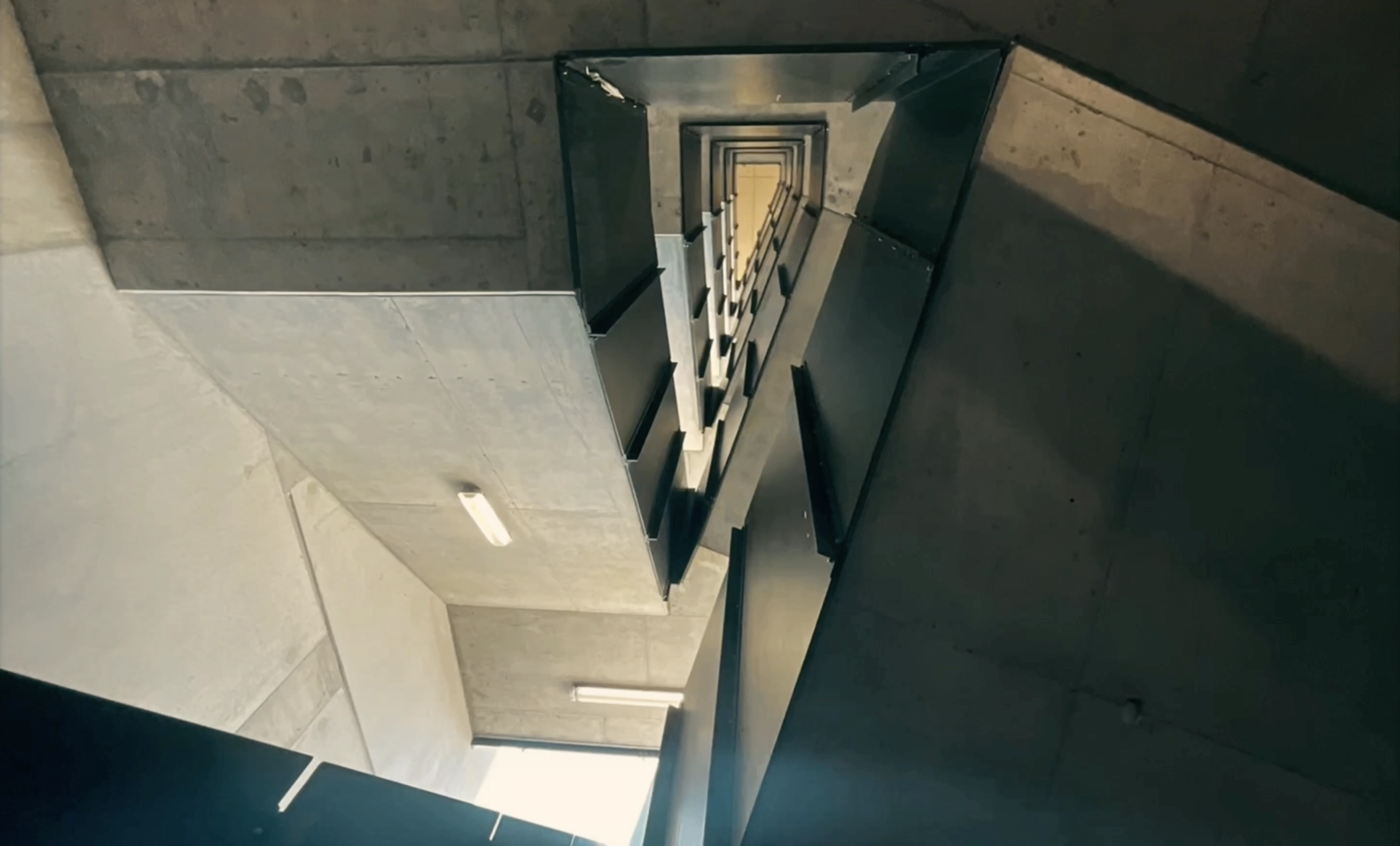
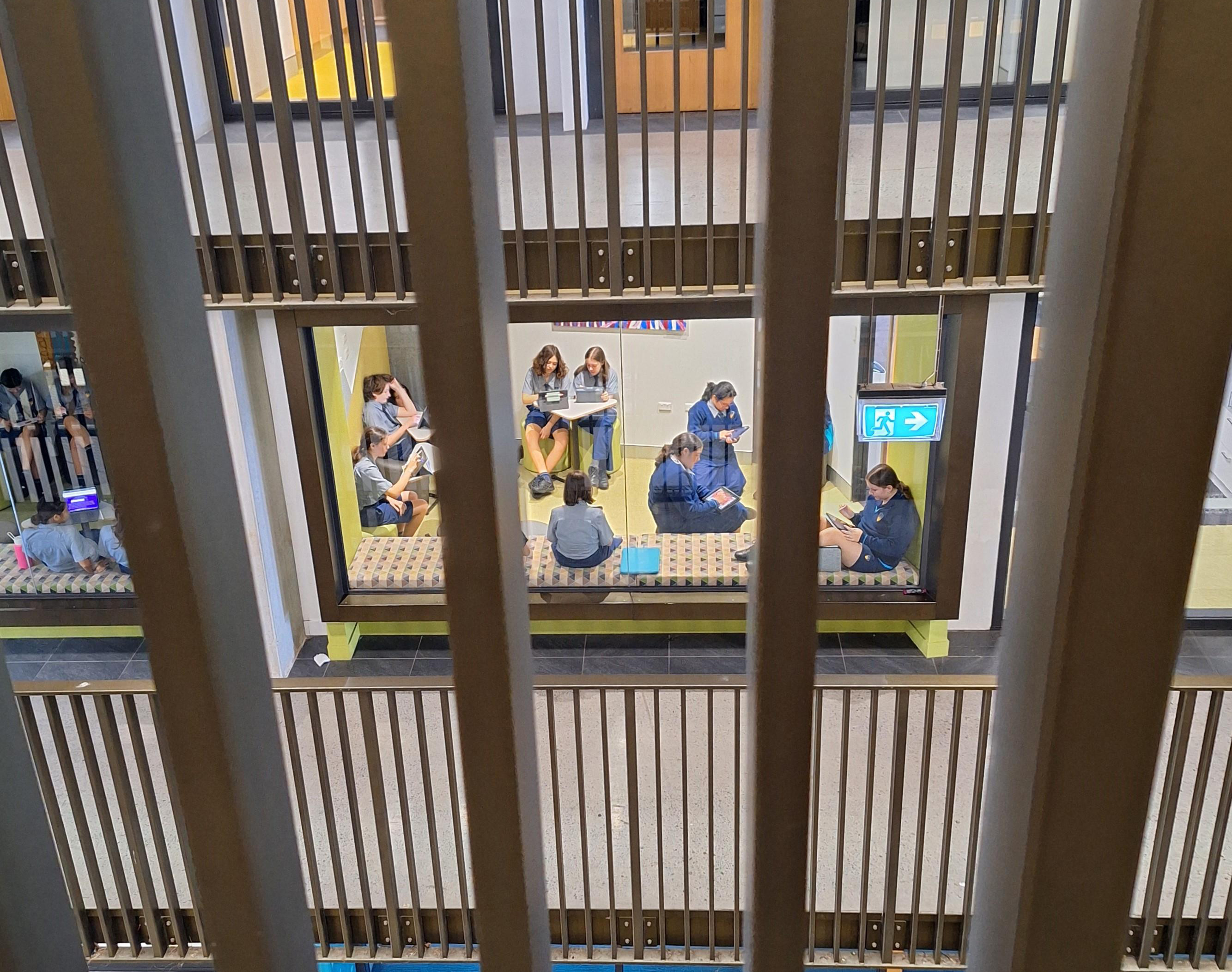
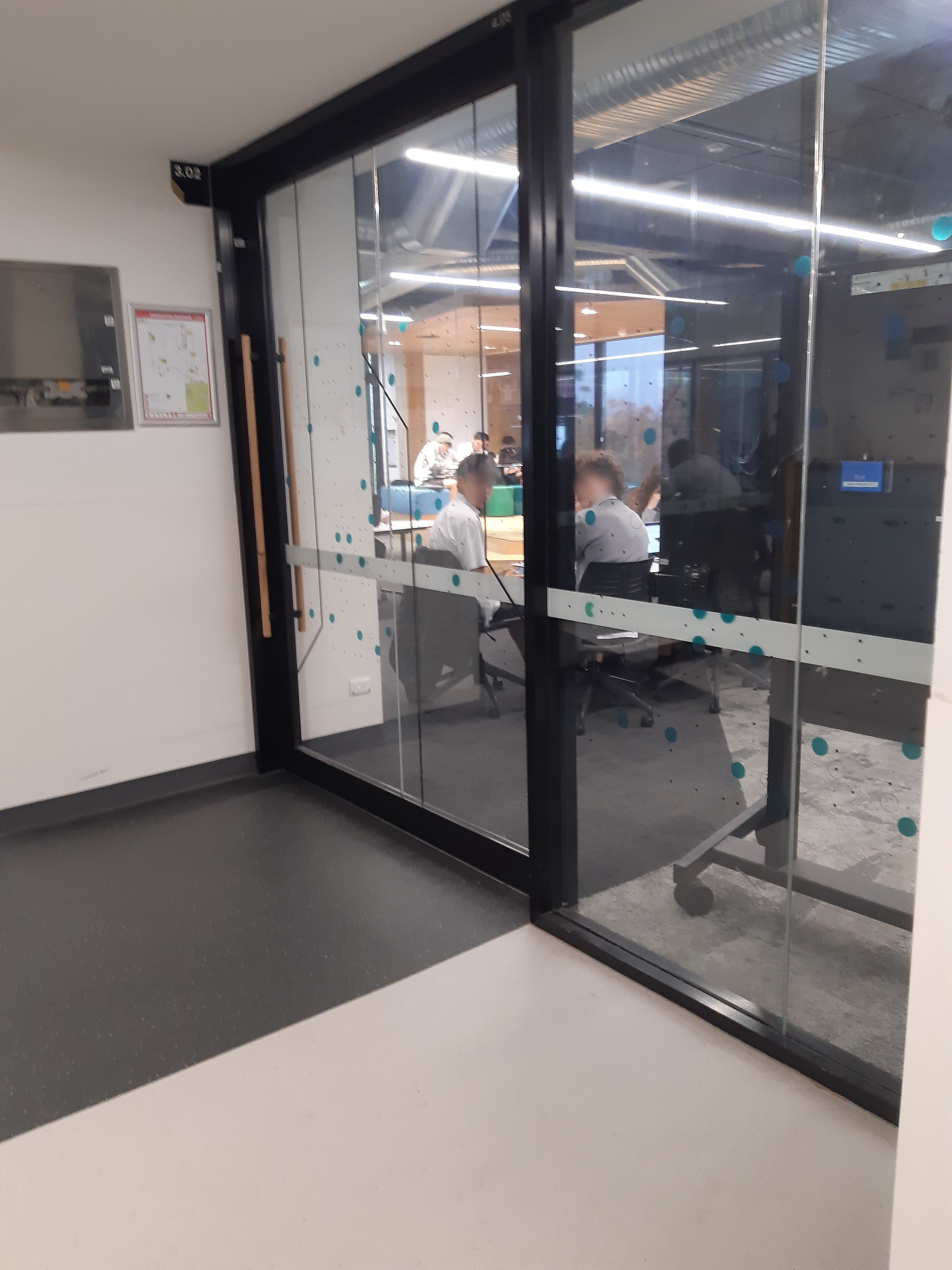
Vertical transparency with glass and atria helps connect the outside and the inside.You can see the world, the city, the sky and activity beyond the school. You can also see many of the other grade levels and activity within the school. There can be a feeling of transcendence, of awe and connection, of theatre and being on display.
Students can feel inspired and connected.
If you are having a good or bad day everyone knows.
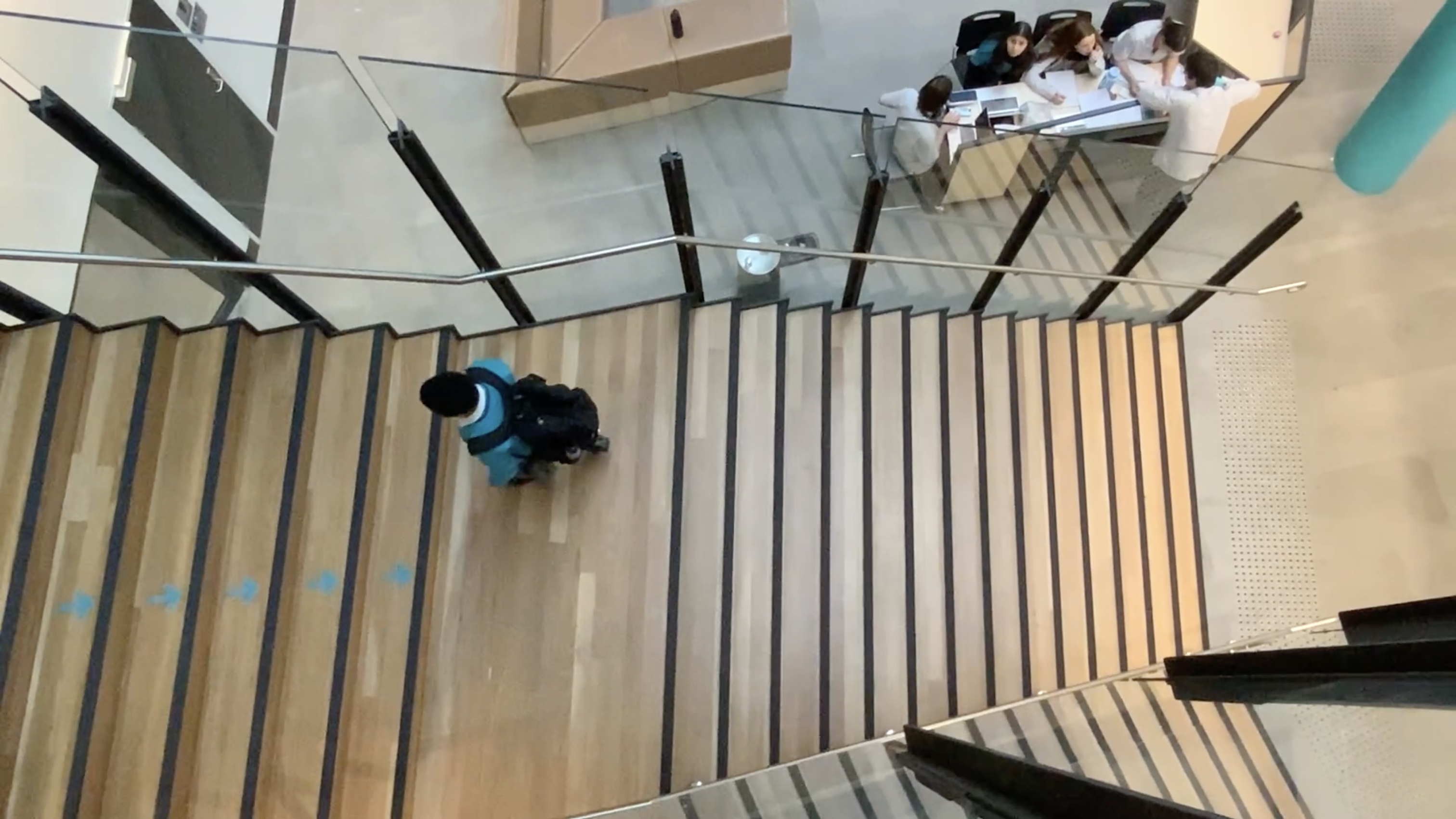
Vertical permability means everything looks close, but it takes a lot of time and effort to get places Vertical planes means gravity. The feeling of being inside all day can mean you lose track of time as light and temperature remain constant.
Students can feel anxious that they may be late to class or feel unsafe if they rush through a crowd. Yet the visibility of open staircases and atria allows you to see where to go, find your way and see your friends along the journey.
Students can underestimate the time and energy it takes to get places.
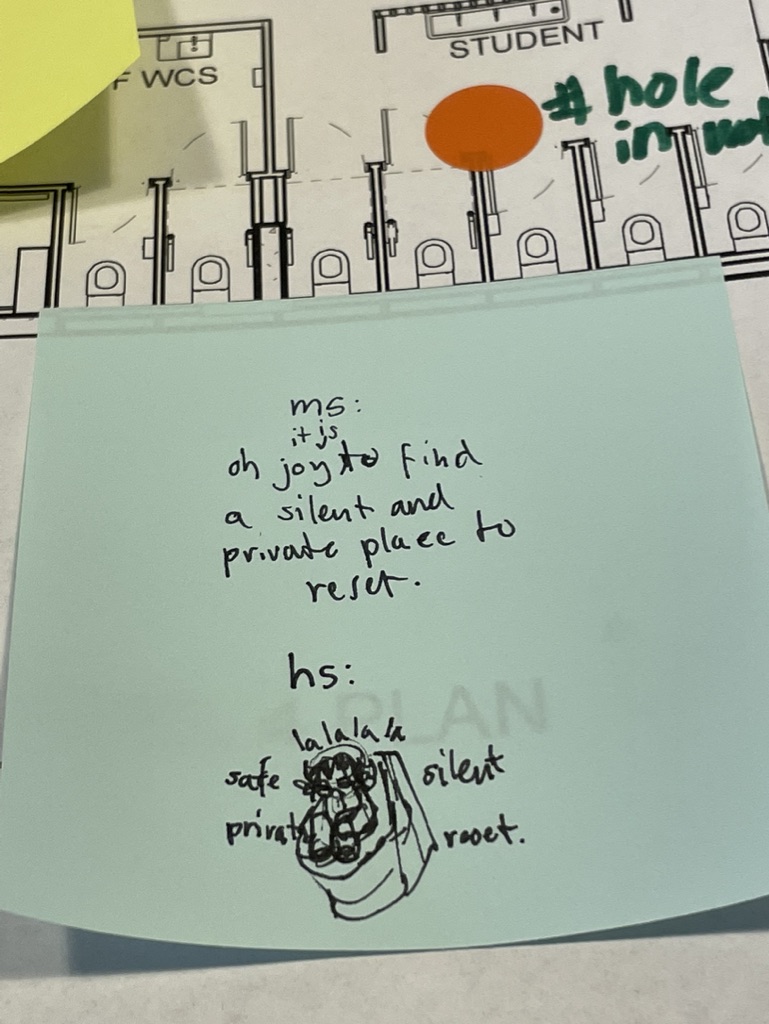
The glass walls of classrooms, walkways, stairwells and balconies create feelings of openness and togetherness. Openness sometimes also creates an urge to get away from everyone and have some privacy. If privacy is the ability to control who or what comes into your personal space, then access to some privacy is essential for psychological wellbeing and adolescent identity development.
Openness means that noise and smells can travel. Sometimes these comfort (music, cooking) and sometimes lead to sensory overwhelm. Closed classrooms and toilet cubicles offer spaces for privacy and control of the sensory and open input when needed but only if there is access when needed and locks work.
Sometimes students will look for an escape to openness, or from openness.
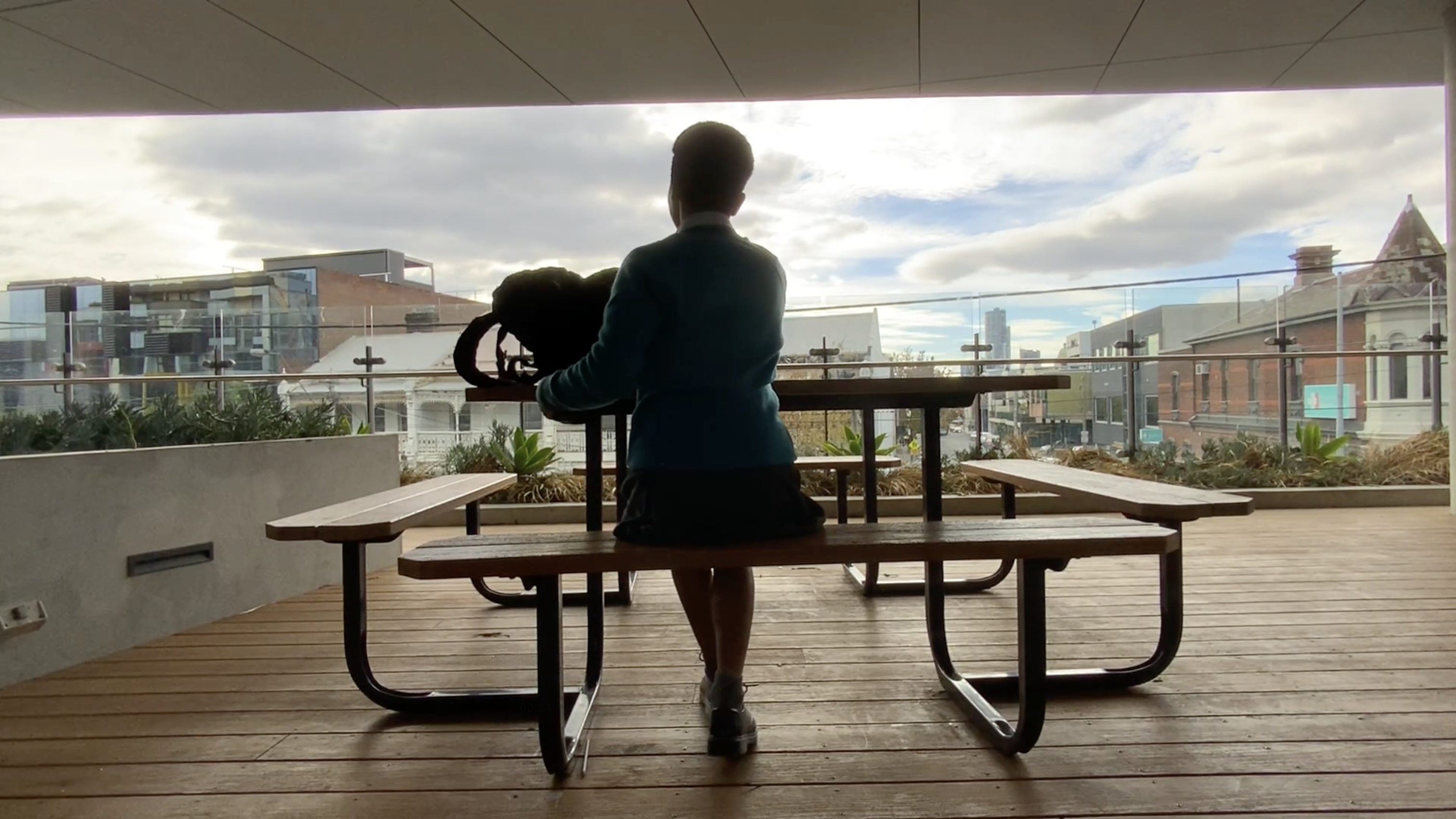
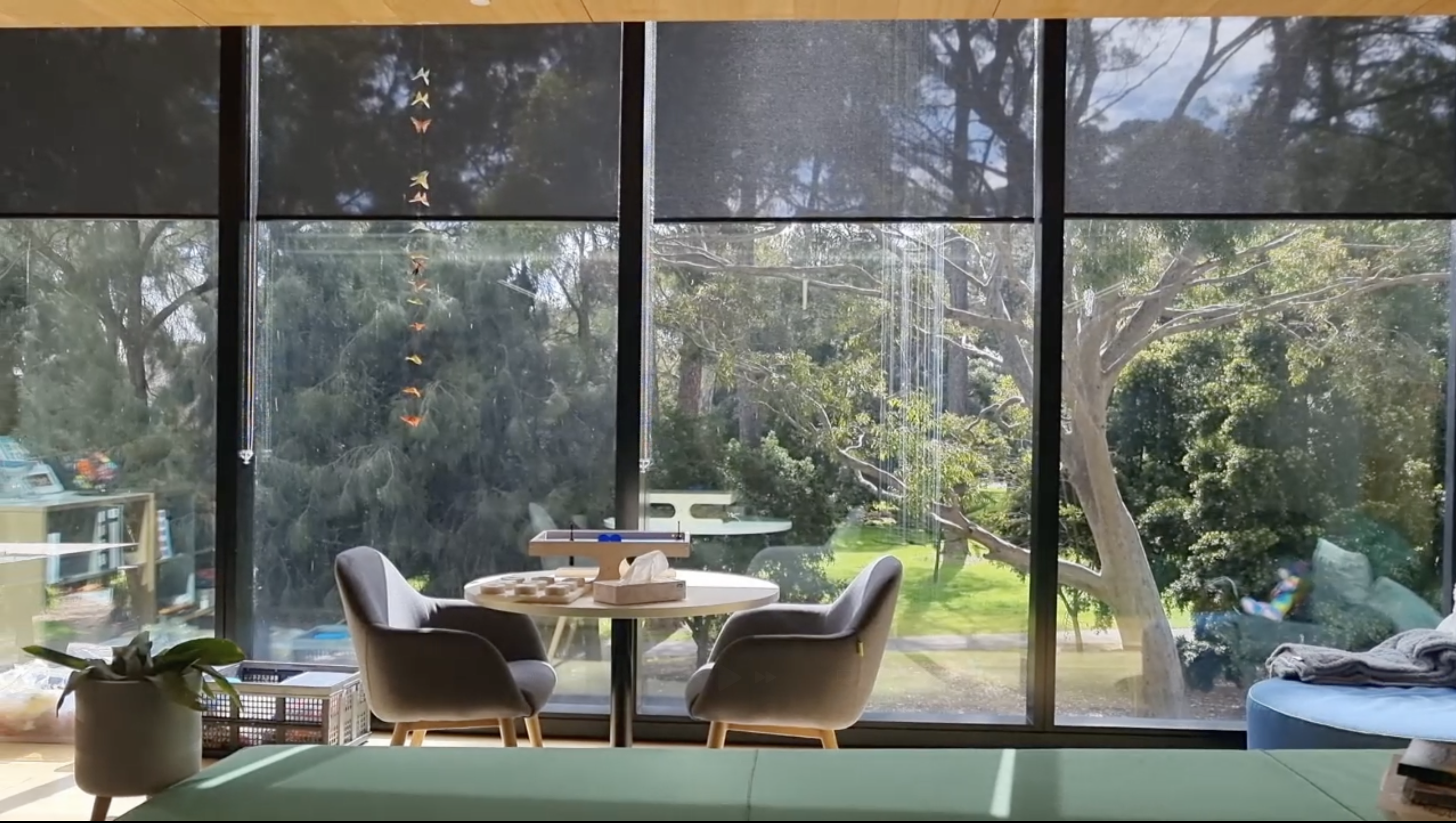
The density of being close together for a lot of the day leads to an urge to breakout to "be ourselves for a little bit” seeking out spaces with prospect (views) and refuge.
Being ourselves can mean playing or quiet contemplation. When many students want to use the same space for conflicting purposes, some students can feel a sense of injustice and may dominate, foul or sabotage a space to try and keep others away. Some places hold strong memories of friendships.
Breakout spaces serve multiple, sometimes conflicting purposes.
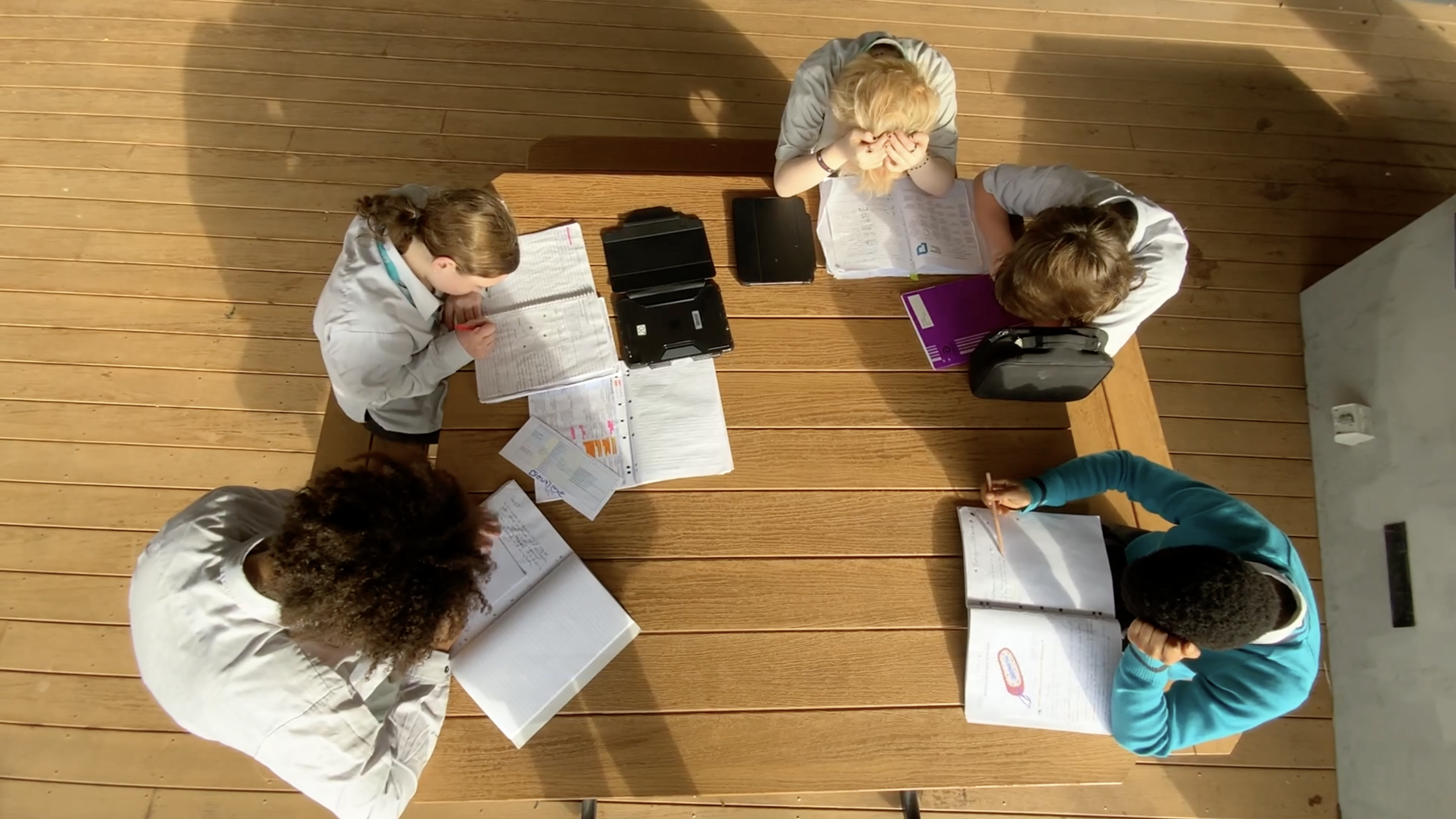
Being in close proximity to others requires a high level of self-regulation and co-regulation. Some students told us that to be able to focus, they need to first "get my energy out" which then enables them to "reset". Playful energetic exploration happened on stairs, in corridors, and in the gym or nearby parks through jumping, chasing and running. Other times "reset" involved taking a minute for themselves to find an inner calmness and self-control.
Learning to self-regulate and co-regulate is a vital adolescent developmental process that sometimes involves a reset.
Being up high means you can see who is coming near your school grounds and wonder if they are a stranger to be wary of. Regular requirements to practice lock down drills is a reminder to everyone that there may be times when you are at risk in school. With high visibility and permeability, students point out that there is no where to hide. Yet at the same time many students felt secure because they can see their teachers nearby. There is low risk of losing things even if a laptop is left, as the school or classroom has managed access points.
Being up high and visible is both a source of wariness and security.
When the art class is held in the science lab, or there are regular class swaps to share facilities, it can feel like the whole school is your classroom.
Density means that there needs to be multiple uses for lots of spaces – corridors as classrooms, and furniture that can be moved. As this lack of predictability can cause some students and teachers stress, the flexibility is balanced out by fixed routines, shared language and posters, and opportunities to try new things.
Versatile spaces means sharing and being agile learners
We have created a brainstorming game for 3-5 people to help imagine what it is like to live, work, and learn with paradoxes in a vertical school, and what you may want to consider as a designer, school leader, or educator.
choose a scenario
Choose one scenario as the shared situation for your group. You will use this scenario as the starting point for phases 1 and 2.
Each scenario includes a short student-made video. The videos are there for inspiration, especially if you have not spent time in a vertical school. Watch one if it helps your group get a feel for the space, then keep the scenario in mind as you play.
phase 1 of 3
Start by choosing one scenario from the list above. Your group will use that scenario as the shared situation for this round.
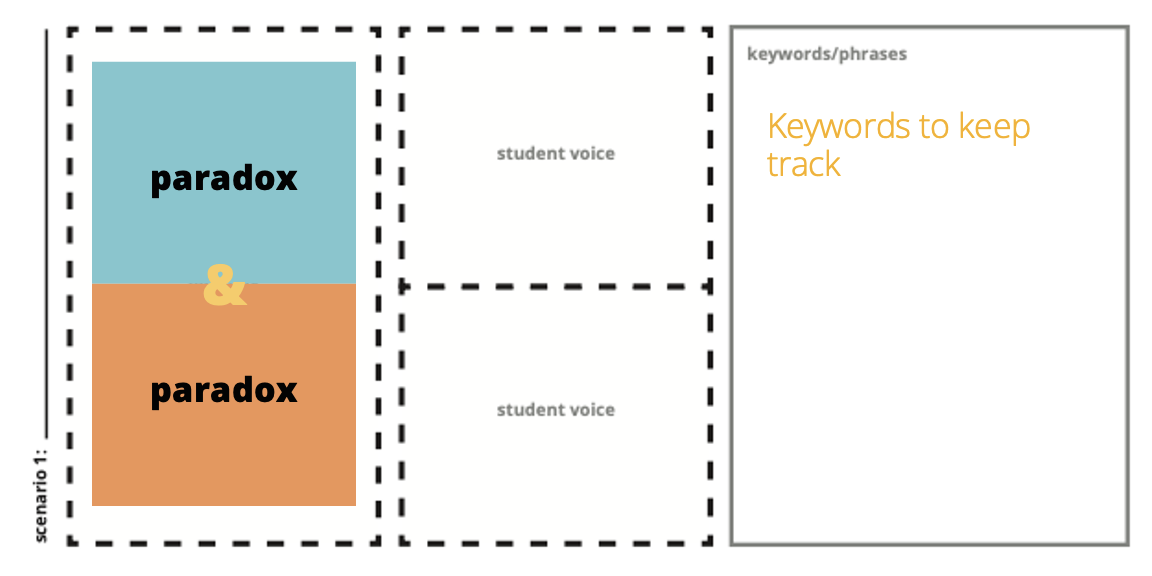
Pick one person from your group to be the judge. Everyone else draws a paradox card. You have one minute to come up with a story or connection for how this paradox might be at play in the scenario.
Take turns presenting your paradox and its connection to the scenario. While this is happening, the judge keeps track and writes down keywords and phrases in the provided section on the playmat.
The judge picks the best connection and places that card on the lowest paradox card place on the play map. Return the other cards to the bottom of the pile.
phase 2 of 3
Use student voice cards to test and deepen the connection between your scenario and the paradox card on the map.
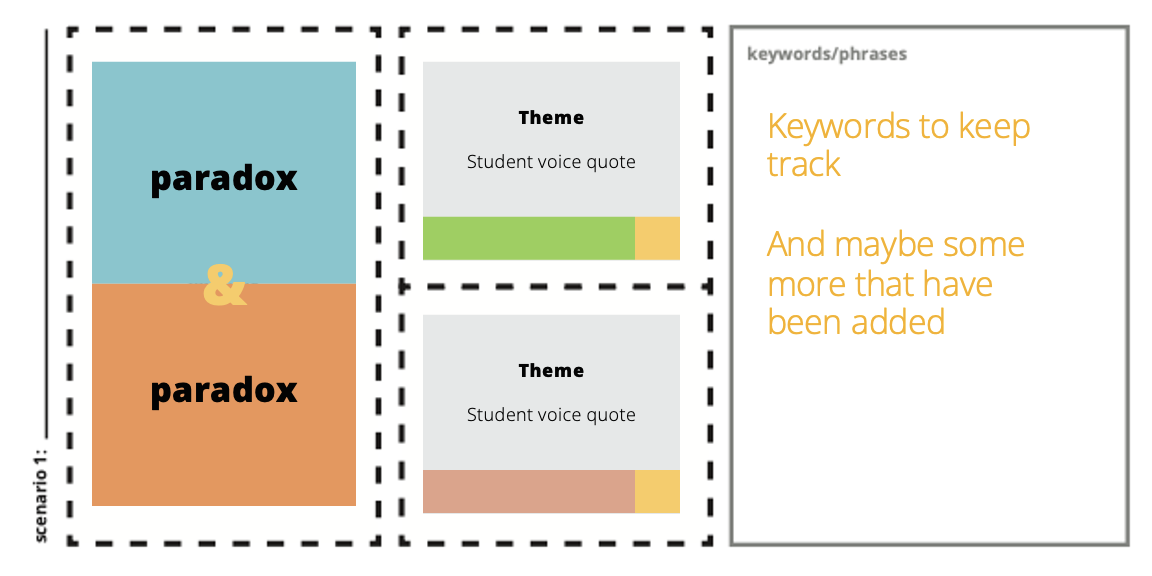
Together as a group, draw a student voice card from the student voice pile and place it on the space next to the paradox card.
Does the student voice card fit your paradox and scenario? If it does not, draw another student voice card and place it on top of the old one. Keep doing this until you find one that fits.
Feel free to keep adding to the keywords and phrases as a group.
Repeat steps 1 and 2 until you have two student voice cards for the current scenario.
keep building up
Choose a second scenario and play another round.
Leave the cards from the first scenario on the board. Then repeat phases 1 and 2 with your second scenario, adding a new paradox card and two student voice cards to the map. The board should keep building up a fuller picture of a day in a vertical school before you move into phase 3.
phase 3 of 3
Turn to the second page of the map, where it asks: how do we enhance thriving in vertical schools?
As a group, talk, sketch, and note:
Draw from more than just one scenario. Consider the building, compounding experiences of students.
if you have time
The playmat has scaffolding for three rounds. If you have time, choose one more scenario and run through phases 1, 2, and 3 again, leaving the previous cards and notes on the board so your ideas keep building.
Rank your ideas
To finish, look across everything on the board and choose the ideas that feel most useful, possible, or important. Rank them as a group so you can see which thriving possibilities you would take forward first.
When adults understand the spatial conditions and paradoxes of vertical learning spaces, they can be more strategic and insightful in how they guide their students.
When two things are true at once (paradox) then managing and finding meaning occurs through curiosity, choice, and creation.
Students want to be focussed through managing and curating the resources available to find a good fit for regulation and flow. It is happening when students say, "I can do this".
Adults can be curious about what focus means to students.
Students want to have choice and voice and do things that matter so that school is comprehensible and they can maximise their wellbeing and learning. It is happening when students say, "It makes sense".
Adults can create opportunities for voice and choice.
Students want to feel a sense of belonging in finding meaningful connections. It is happening when students say, "this has value to me".
Adults can create spatial, social, emotional and intellectual connections of value.


We asked the students to give us their stories. They responded with images, post-it notes, videos, and mini documentaries. We've collected all of these and created more stories that highlight their everyday experiences as students in UV schools.
explore student stories